
Are You Tired of Waking Up with a Dry Mouth and Throat?
Feeling fatigued despite a full night’s sleep? Mouth breathing and constant intense snoring can be the culprits behind these common morning woes and tiredness throughout the day.
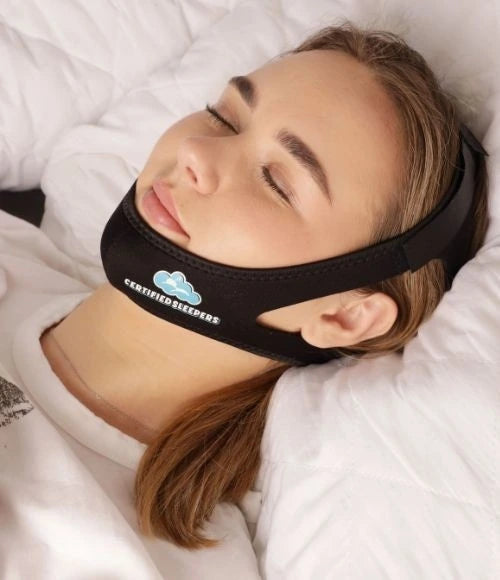
Fortunately, there’s a simple solution that can help alleviate this issue – an adjustable chinstrap to stop mouth breathing and snoring. While often associated with reducing snoring, chinstraps offer a plethora of benefits, including their ability to curb mouth breathing during your sleep, promoting nasal breathing and reducing snoring, leading to more restful nights and energized mornings.
Today, in this blog, Certified Sleepers will help you understand 8 fascinating ways a chinstrap can help you put an end to mouth breathing and enjoy a more restful night’s sleep while improving your health.
Benefits of Using a Chinstrap for Better Sleep
1. Encourages Nasal Breathing
A chinstrap’s main purpose is to hold the jaw gently upward so that the mouth stays closed while you sleep, helping directly with mouth breathing. A chinstrap facilitates nasal breathing by encouraging good jaw posture, which is quite essential for maximum airflow and oxygenation during the night.
- By switching from mouth to nasal breathing, dry throat and airway irritation can be avoided.
- It keeps the lips shut by gently supporting the jaw and chin, which encourages the body to breathe through the nose.
- This ensures optimal airflow and lessens the possibility of snoring.
2. Reduces Snoring
When your tongue falls back and your throat muscles relax, part of your airway is blocked, leading to snoring. This issue can be easily addressed by a chinstrap. It supports your jaw slightly farther forward, helping you breathe properly and reducing throat vibrations.
- Keeps your airway open and reduces vibrations.
- Promotes spontaneous nasal breathing by keeping your mouth closed.
- Improves overall sleep quality.
Chinstraps are a non-invasive solution, most effective for mild cases caused by a loosened tongue or jaw position. If you snore excessively or due to anatomical issues, consult a doctor.
3. Improves Oral Health
Chinstraps promote smooth nasal breathing during sleep, preventing dry mouth and maintaining saliva flow. This helps in:
- Reduced risk of cavities and enamel protection.
- Healthier gums and reduced gum disease risk.
- Fresher breath by avoiding bad odor caused by dry mouth.
4. Enhances Sleep Quality
Mouth breathing disrupts sleep patterns, leading to fragmented rest. By encouraging nasal breathing and reducing snoring, chinstraps improve sleep and energy levels.
- Nasal breathing filters and humidifies air for deeper sleep.
- Creates a quieter sleeping environment for you and your partner.
5. Alleviates Allergy Symptoms
People with allergies or nasal congestion may find relief using a chinstrap. It promotes nasal airflow, bypassing the mouth, helping reduce congestion and discomfort during sleep.
6. Supports CPAP Therapy
A chinstrap helps patients on CPAP therapy by keeping the mouth gently shut, preventing air leakage and ensuring effective therapy for sleep apnea treatment.
7. Mitigates Dry Mouth
Mouth breathing can cause dry mouth and throat irritation. A chinstrap prevents this by encouraging nasal breathing and maintaining hydration throughout the night.
8. Enhances Oxygenation
Nasal breathing is more effective for oxygen intake than mouth breathing. An adjustable chinstrap ensures proper oxygen supply, improving health and energy levels.
Conclusion
Certified Sleepers has brought you a good collection of adjustable anti-snore chinstraps for every mild to light snorer. Backed by long-time research on human respiratory systems and fabrics, these anti-snore straps are easy to use and wear. They provide an efficient way to stop mouth breathing, snoring, and their negative effects. With this, you can easily improve the quality of your sleep, minimize snoring, and wake up feeling invigorated every morning.
FAQs
1. How does a chinstrap help stop mouth breathing during sleep?
A chinstrap works by gently supporting your jaw and keeping your mouth closed while you sleep. This naturally encourages nasal breathing, which is the body’s preferred and more efficient way of breathing. When you breathe through your nose, the air is filtered, humidified, and delivered more effectively to your lungs. This reduces dryness in the mouth and throat, improves oxygen intake, and promotes a more restful sleep. For many users in the U.S., switching to nasal breathing with a chinstrap can significantly reduce morning fatigue and discomfort.
2. Can a chinstrap really reduce snoring?
Yes, a chinstrap can help reduce snoring, especially in mild to moderate cases. Snoring often occurs when the mouth falls open and the airway becomes partially blocked due to relaxed throat muscles. By keeping the mouth closed and the jaw in a stable position, a chinstrap helps maintain an open airway and reduces vibrations that cause snoring. However, if snoring is caused by conditions like sleep apnea, it’s important to consult a healthcare provider for proper diagnosis and treatment.
3. Is it safe to use a chinstrap every night?
For most people, using a chinstrap nightly is completely safe when it is properly fitted and made from breathable, skin-friendly materials. In fact, consistent use can help train your body to adopt nasal breathing habits over time. However, users with severe nasal congestion, chronic sinus issues, or diagnosed sleep apnea should consult a doctor before regular use. Choosing an adjustable and comfortable chinstrap is key to avoiding discomfort during extended use.
4. Will a chinstrap help with dry mouth and sore throat in the morning?
Yes, one of the biggest benefits of using a chinstrap is the reduction of dry mouth and throat irritation. Mouth breathing overnight can lead to dehydration in the oral cavity, causing discomfort and bad breath. By keeping the mouth closed and promoting nasal breathing, a chinstrap helps retain natural moisture, supports saliva production, and prevents dryness. This results in waking up feeling more refreshed and comfortable.
5. Can I use a chinstrap if I am using a CPAP machine?
Absolutely. Chinstraps are commonly used alongside CPAP therapy, especially for individuals who experience air leakage through the mouth. When your mouth opens during CPAP use, the pressurized air can escape, reducing the effectiveness of the therapy. A chinstrap helps keep the mouth closed, ensuring that the air pressure is maintained and the therapy works as intended. Many CPAP users in the U.S. find this combination highly effective for improving sleep quality.
6. Does a chinstrap improve overall sleep quality and energy levels?
Yes, by reducing snoring and encouraging proper breathing, a chinstrap can significantly improve sleep quality. Nasal breathing allows for better oxygen exchange, which helps your body enter deeper and more restorative sleep cycles. This leads to fewer interruptions during the night and better recovery for your body. As a result, users often report waking up with higher energy levels, improved focus, and reduced daytime fatigue.
7. Who should consider using a chinstrap for sleep?
A chinstrap is ideal for individuals who experience mouth breathing, mild snoring, dry mouth, or disrupted sleep. It is especially beneficial for people who want a non-invasive and affordable solution to improve their sleep quality. Additionally, CPAP users, allergy sufferers, and individuals dealing with nasal breathing issues may also benefit from using a chinstrap. However, those with severe sleep disorders should seek medical advice before relying solely on this solution.